
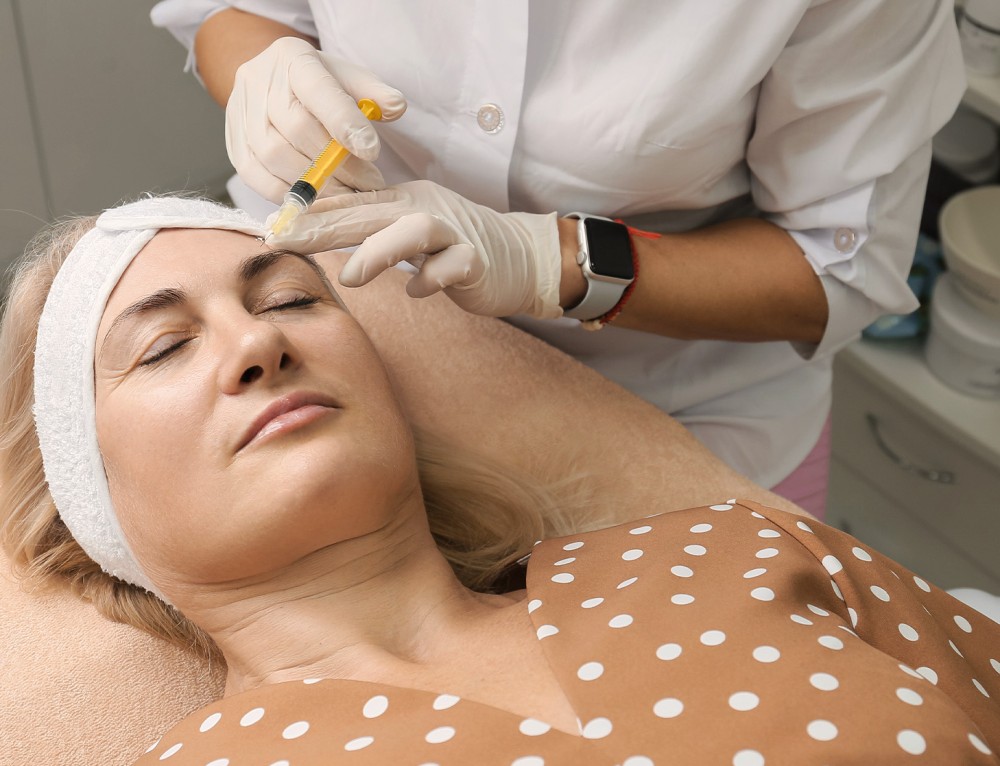
A Regenerative Approach to Facial Rejuvenation
Facial aging is often thought of in terms of wrinkles. In reality, it is a much more complex process involving gradual volume loss, changes in tissue quality, and a decline in structural support. Over time, the skin becomes thinner, collagen production decreases, bone shrinks and the underlying facial architecture begins to shift.
Historically, facial rejuvenation treatments have often focused on restoring lost volume with synthetic fillers. These options can lead to immediate improvement but may have limitations and include the possibility of complications. Results tend to be temporary, and repeated use can sometimes create an overfilled or less natural look. Importantly, these treatments do not address tissue quality or underlying health.
In recent years, there has been a growing shift in medicine toward regenerative therapies—treatments that work with the body rather than simply adding to it. One such approach is the use of autologous bio-fillers, derived from the patient’s own blood.
Platelet-Rich Fibrin (PRF) therapy is an advanced regenerative treatment for skin and facial rejuvenation. PRF is a concentration of platelets (cells involved in blood clotting), fibrin (a protein that helps form clots), and growth factors. It is obtained through a simple blood draw. Unlike synthetic products, PRF is entirely biocompatible and uses your body’s own natural molecules, essential for healing, tissue repair, and collagen production.
This approach is unique in that it does not function as a conventional filler. Rather than adding volume, PRF therapy stimulates the body’s regenerative activity, gradually improving skin quality, increasing collagen density, and restoring natural volume over time.
Clinically, PRF therapy for facial regeneration can be used in areas such as the under-eye region, midface, and fine lines, as well as for overall skin regeneration and rejuvenation. The results develop progressively, offering a more natural and integrated outcome compared to immediate volumization.
PRF therapy offers several advantages for skin regeneration. Since the material is from the patient, adverse reaction risk is very low. Results look soft and natural. The treatment also improves long-term tissue health, not just immediate appearance.
That said, it is important to recognize the limitations. Results are not immediate and often require a series of treatments. Outcomes can vary depending on the individual, and the technique itself requires a precise and thoughtful approach.
In clinical practice, the most effective results are often achieved by combining regenerative therapies with other modalities that support tissue stimulation and remodelling. This layered approach enables more comprehensive, balanced outcomes.
In periodontics, we have long understood that true success lies in the ability to regenerate and maintain healthy tissue around teeth over time. That same principle is now shaping the future of aesthetic medicine.
Rather than focusing solely on correction, the goal is shifting toward restoration—supporting the body’s ability to heal, rebuild, and maintain its natural structure.
This represents not just a new treatment option, but a different way of thinking about aging and rejuvenation.